AI Agents Explained: How Autonomous Software Runs Businesses
AI agents are autonomous software programs that can perceive their environment, make decisions, and take actions to achieve goals — without step-by-step human instructions. They're the technology behind the emerging wave of zero-employee companies, and they're fundamentally changing what it means to "run a business."
What Makes AI Agents Different from Regular AI
When you use ChatGPT to write an email, that's AI as a tool. You prompt, it responds, done. An AI agent is fundamentally different:
| Characteristic | AI Tool | AI Agent |
|---|---|---|
| Initiative | Responds when prompted | Acts autonomously |
| Memory | Forgets between sessions | Maintains context over time |
| Actions | Generates text/images | Executes real-world actions |
| Planning | Single-step responses | Multi-step plans |
| Adaptation | Same response each time | Learns from outcomes |
| Duration | Seconds per interaction | Runs continuously |
An AI agent doesn't just write your marketing email — it decides which customers to email, drafts personalized messages, sends them, monitors open rates, adjusts the strategy, and follows up with non-openers. Autonomously.
How AI Agents Work
Every AI agent operates on a loop:
Perceive — The agent observes its environment. For a business agent, this might mean reading sales data, monitoring customer support tickets, checking website analytics, or reviewing competitor activity.
Plan — Based on observations, the agent creates a plan. "Sales are down 15% this week. Email open rates dropped. I should test new subject lines and increase social posting frequency."
Act — The agent executes the plan using tools: sending emails, publishing content, adjusting ad bids, responding to customers, updating databases, deploying code.
Learn — The agent evaluates results. Did the new subject lines improve open rates? Did social posts drive traffic? It adjusts its approach based on outcomes.
This loop runs continuously, 24/7. The agent gets better over time as it accumulates experience.
Types of Business AI Agents
Marketing Agents
- Write and publish blog posts, social media content, newsletters
- Run and optimize ad campaigns across platforms
- Manage SEO strategy including keyword targeting and content optimization
- Track performance metrics and adjust strategy
Sales Agents
- Qualify inbound leads based on behavior and fit
- Draft and send personalized outreach sequences
- Follow up with prospects on optimal schedules
- Update CRM records automatically
Support Agents
- Respond to customer inquiries via chat, email, and social media
- Escalate complex issues to humans when needed
- Create and update help documentation
- Analyze support patterns to identify product issues
Operations Agents
- Monitor server uptime and performance
- Process orders, invoices, and payments
- Generate financial reports and forecasts
- Manage inventory and vendor relationships
Product Agents
- Triage and prioritize bug reports
- Write and deploy code fixes
- Run automated tests
- Monitor user behavior to identify UX issues
Real-World AI Agent Architectures
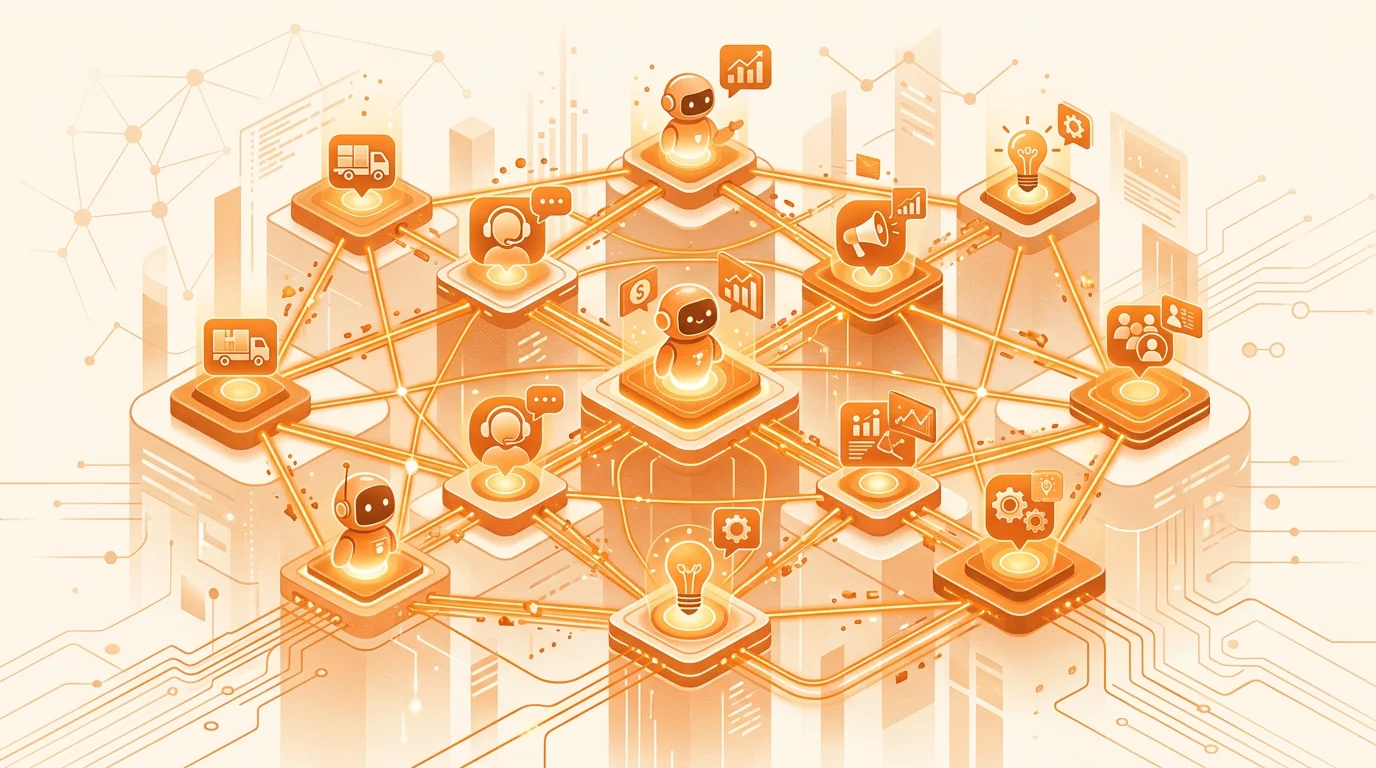
The most effective AI agent setups we've seen use a hierarchical structure:
CEO Agent — Sets strategy, allocates resources, monitors overall performance. Reads from a strategy document and coordinates other agents.
Department Agents — Marketing, sales, product, support, operations. Each has its own context, tools, and goals.
Specialist Agents — Individual contributors. The SEO writer, the email sender, the bug fixer. These do the actual work.
This mirrors a traditional company org chart — except every position is filled by software that works 24/7 at a fraction of the cost.
The Zero-Employee Company
AI agents make something previously impossible a reality: companies that generate revenue with zero human employees.
Here's what this looks like in practice:
- Revenue: Automated product sales, subscription billing, ad revenue
- Marketing: AI agents create content, run ads, optimize SEO
- Support: AI handles 80%+ of customer inquiries
- Product: AI fixes bugs, ships improvements, monitors uptime
- Finance: AI tracks revenue, manages expenses, generates reports
The human founder sets strategy, reviews AI output, and makes high-level decisions. But the day-to-day operations are fully automated.
This isn't theoretical. Companies operating this way exist today, and you can invest in them on EvolC.
The Economics of AI Agents
The cost advantage is staggering:
| Role | Human Cost (Annual) | AI Agent Cost (Annual) |
|---|---|---|
| Content Writer | $50,000-$80,000 | $2,000-$5,000 |
| Customer Support Rep | $35,000-$55,000 | $1,000-$3,000 |
| Data Analyst | $70,000-$100,000 | $1,500-$4,000 |
| Marketing Manager | $80,000-$120,000 | $3,000-$8,000 |
| Full Operations Team | $300,000-$500,000 | $10,000-$25,000 |
These are not estimates — they're based on real costs of running AI agents at production scale. The full comparison is even more dramatic when you factor in benefits, office space, management overhead, and recruiting costs. See our detailed analysis in AI vs Human Employees.
Limitations and Risks
AI agents aren't perfect. Honest assessment of current limitations:
- Judgment: AI agents can make confidently wrong decisions. Human oversight on critical decisions is still essential.
- Creativity: AI agents excel at optimization and execution. Genuine strategic innovation still requires human insight.
- Relationships: Deep business relationships — partnerships, enterprise sales, investor relations — require human trust and nuance.
- Edge cases: Unusual situations outside training data can trip up agents. Robust error handling and escalation paths are necessary.
- Reliability: Agents occasionally fail silently. Monitoring and alerting systems are essential.
Getting Started with AI Agents
If you want to start using AI agents in your business:
- Start small: Automate one repetitive task (email follow-ups, social media posting, report generation)
- Build context: Give the agent access to your business data, strategy docs, and brand guidelines
- Monitor closely: Review agent output daily during the first month
- Expand gradually: Add new agents for new functions once you trust the first one
- Set boundaries: Define what agents can do autonomously vs. what requires human approval
For a broader look at AI business opportunities, see our guide to AI business ideas for 2026. And if you'd rather invest in AI-run companies than build one, explore the EvolC marketplace to see what zero-employee businesses look like in practice.