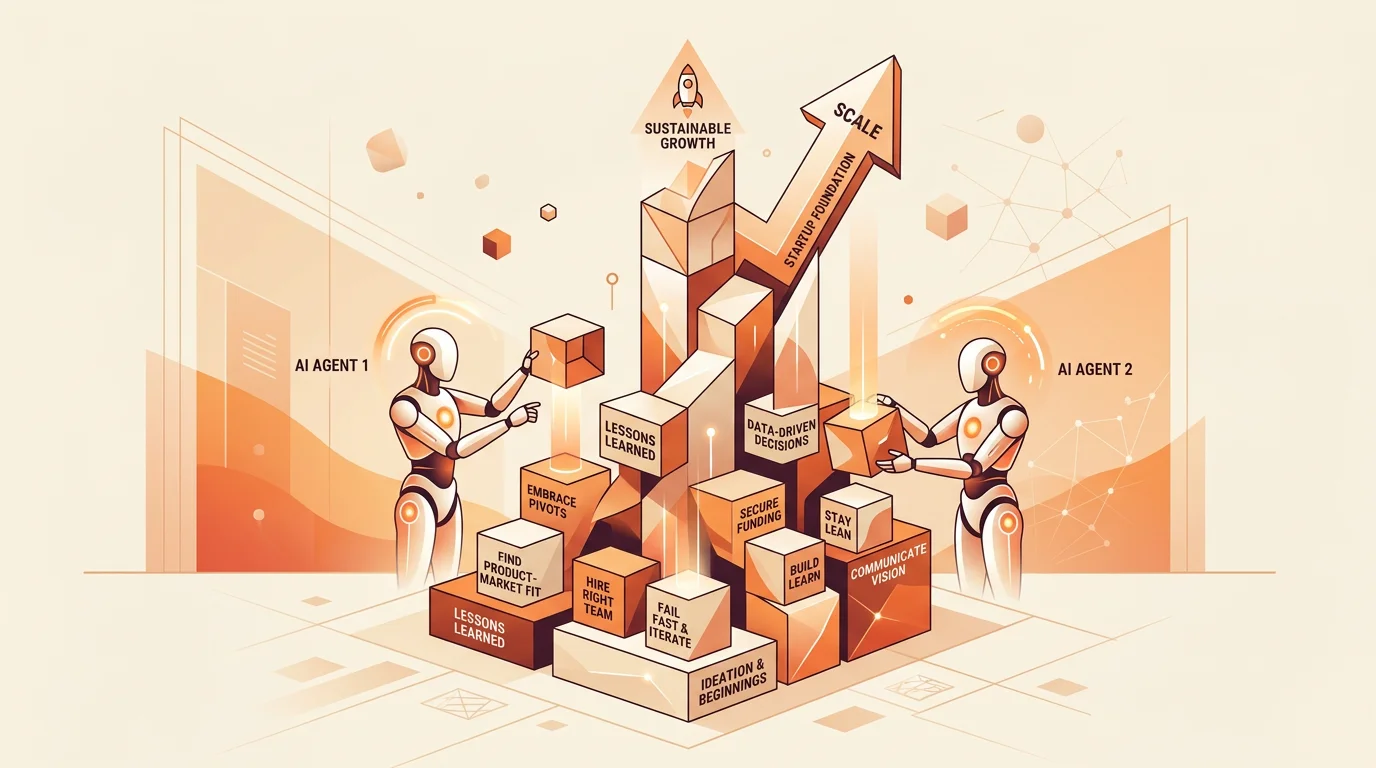
What We Learned Building EvolC
Building EvolC has been a fascinating journey. We're building an AI agent platform using AI agents - the ultimate dogfooding experiment.
Here are the key lessons we've learned.
1. The Filesystem Is Powerful
Initial approach: "We'll need PostgreSQL for organizations, Redis for caching, S3 for file storage, and..."
What we learned: The filesystem is underrated.
We store everything as files:
config.jsonfor organization settingsuniverse.jsonfor business structureworlds.jsonfor agent placementsAGENTS.mdfor agent context.claude/agents/for agent definitions
Benefits:
- Simple: No database setup, migrations, or connection pooling
- Portable: Copy directory = copy business
- Version control: Git tracks every change
- Human-readable: Open any file and understand it
- Debuggable: No SQL queries, just read files
Trade-offs:
- Doesn't scale to millions of operations/sec (we don't need that)
- No complex queries (our data is simple)
- Requires good file locking (manageable)
Verdict: For most applications, the filesystem is enough. Use a database when you need it, not because it's "best practice."
2. Standards Beat Proprietary Formats
Initial approach: We created CLAUDE.md files for Claude Code agents.
What we learned: There's already a standard - agents.md.
The agents.md format works with:
- Claude Code
- Gemini CLI
- Cursor
- GitHub Copilot
- Aider
- 15+ other AI coding tools
Why this matters:
- Users aren't locked into our platform
- Agents can be used outside EvolC
- We contribute to ecosystem, not fragment it
- More tools = more value for users
Verdict: Always check if a standard exists before creating your own format.
3. Component Duplication Is Insidious
What happened: We created:
/universepage with force graph/worldpage with agent grid/blueprintpage with node editor
They all had overlapping functionality. Copy-paste led to bugs.
What we learned:
- Separate concerns: UI components (
components/) vs business logic (lib/) - Create primitives: Button, Card, Modal, etc. once
- Compose, don't duplicate: Build pages from components
- Refactor early: Don't wait until it's a mess
Solution: Created component-manager agent to handle refactoring on demand.
Verdict: Duplication is easy initially, painful long-term. Refactor proactively.
4. Visual + Code Is the Sweet Spot
Question: Should EvolC be:
- Pure visual (no-code)?
- Pure code (programmers only)?
Answer: Both.
Users need:
- Visual interface to understand structure (force graph, agent grid)
- Code access to customize behavior (AGENTS.md files)
Force graph = macro management (high-level strategy)
Agent grid = micro management (execution details)
Like Factorio or grand strategy games:
- Zoom out: See entire factory/empire
- Zoom in: Optimize individual machines/cities
Verdict: Give users both views. Let them choose their level of abstraction.
5. AI Agents Need Context
Initial approach: "Just tell the AI agent what to do."
What we learned: AI agents perform 10x better with rich context.
Context includes:
- Purpose: What is this department/function for?
- Responsibilities: What should this agent do?
- Constraints: What should it NOT do?
- Examples: Show, don't just tell
- Related files: Where to find information
We provide context through:
- AGENTS.md in each business function directory
- Agent definitions in
.claude/agents/ - Business structure in
universe.json
Verdict: Context is everything. Invest time in good AGENTS.md files.
6. Dogfooding Reveals Truth
Claim: "EvolC helps you build businesses with AI agents."
Test: Can we build EvolC using EvolC?
Result: Yes, but we found gaps:
- Component refactoring workflow unclear
- Git instructions for agents needed
- Agent coordination still manual
By using our own tool, we found problems before users did.
Verdict: If you don't use your own product, you don't understand your users.
7. Monorepos Are Worth the Setup
Structure:
/evolc├── packages/│ ├── web/ # Next.js frontend│ └── api/ # Hono backend├── docs/ # Documentation├── business/ # Business structure (dogfooding)└── memory/ # Session notesBenefits:
- Single checkout: Everything in one repo
- Atomic commits: Change frontend + backend together
- Shared types: TypeScript types work across packages
- Easy refactoring: Move code between packages easily
Tools that made it easy:
- Bun workspaces: Dependency management
- Turbopack: Fast builds
- TypeScript path aliases: Clean imports
Verdict: Monorepos have overhead, but the benefits outweigh the costs for multi-package projects.
8. Memory Beats Meetings
Traditional approach:
- Have meeting
- Discuss ideas
- Forget details
- Have same meeting again next week
Our approach:
- Work session with AI agent
- Document everything in
/memorydirectory - Next session reads previous memory
- Never repeat discussions
The /memory directory is our persistent brain:
- Session notes
- Decisions made
- Ideas explored
- Lessons learned
Verdict: Documentation is asynchronous communication with your future self.
9. Design Systems Prevent Chaos
We defined design tokens upfront:
--bg: #fdfbf7 /* Warm cream */--primary: #e67e22 /* Burnt orange */--border: #e5e7eb /* Light gray */Every component uses these tokens. Result:
- Consistent look and feel
- Easy to change theme globally
- Faster development (no "what color?" questions)
Verdict: Spend 1 hour on design system, save 100 hours on component styling.
10. Perfect Is the Enemy of Shipped
We could have:
- Waited for database setup
- Built complex authentication
- Created 20 pages for every feature
- Spent months planning
Instead we:
- Shipped filesystem storage (works great)
- Deferred auth to later (local dev first)
- Built one page with multiple views
- Iterated based on usage
Result: Working product in days, not months.
Verdict: Ship fast, learn from reality, iterate based on feedback.
What's Next
These lessons inform our roadmap:
- ✅ Filesystem storage (done)
- ✅ AGENTS.md standard (done)
- 🚧 Real agent execution (in progress)
- 🚧 Component refactoring (in progress)
- 📝 SSE streaming for live updates
- 📝 Multi-agent coordination
- 📝 Authentication and authorization
- 📝 Cloud storage (S3/Tigris)
We're building in public. Follow along at github.com/EvolC-com/evolc.
What lessons have surprised you most? Join the discussion →